The Uses and Applications of Trimethyl Phosphonoacetate Cas No. 5927-18-4
Introduction
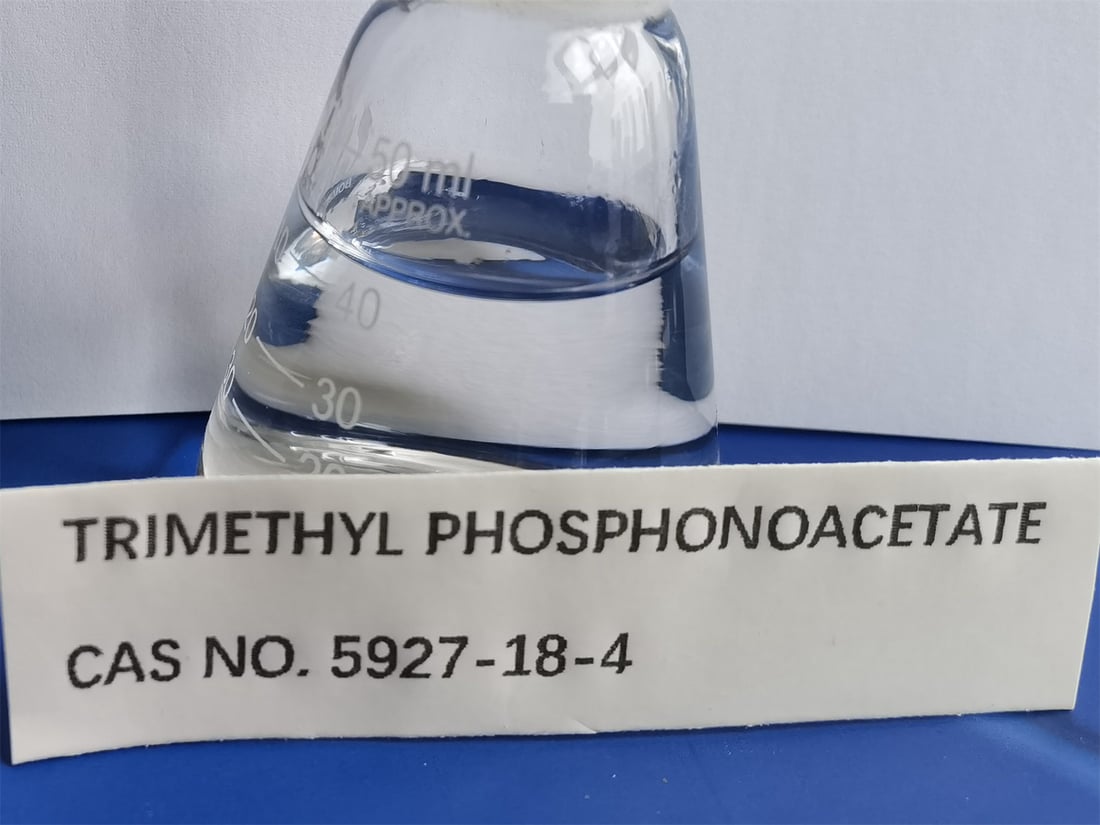
Trimethyl phosphonoacetate, also known as TPA, is a chemical compound with the CAS No. 5927-18-4. This colorless liquid is widely used in various industries for its versatile properties. In this article, we will explore the different prospects and applications of Trimethyl phosphonoacetate Cas No. 5927-18-4.
What is Trimethyl Phosphonoacetate?
Trimethyl Phosphonoacetate, with the CAS number 5927-18-4, stands as a pivotal chemical compound in the realm of organic synthesis. It serves as a versatile reagent, primarily utilized for its efficacy in facilitating Michael addition reactions—a cornerstone methodology for constructing carbon-carbon bonds in complex organic molecules. This compound emerges from the marriage of phosphonoacetate with three methyl groups, culminating in a substance that boasts a unique blend of reactivity and stability.
Chemical Properties and Structure
Trimethyl Phosphonoacetate is characterized by its molecular formula, C?H??O?P, which lays the groundwork for its distinctive chemical properties. It exists as a clear, colorless liquid under standard conditions and showcases a notable boiling point that underscores its thermal stability. The presence of both methyl and phosphono groups within its structure imbues it with a dual nature—hydrophobic methyl groups and the hydrophilic phosphono group—rendering it amenable to a wide array of chemical reactions.
Stability and Reactivity
One of the hallmark traits of Trimethyl Phosphonoacetate is its commendable stability, allowing it to be stored and handled with relative ease, a feature that significantly enhances its utility in laboratory settings. However, its reactivity profile is where it truly shines. It participates in nucleophilic attacks, particularly in the presence of strong bases, to facilitate the formation of carbon-carbon bonds. This reactivity is pivotal for synthesizing complex molecules, making it a staple in organic synthesis laboratories.
The CAS Registry Number Explained
What are CAS Numbers?
CAS numbers, or Chemical Abstracts Service numbers, serve as a unique identifier for chemical substances. It's a system devised to provide a unique, unmistakable identifier for chemical substances, ranging from pure compounds to alloys and mixtures.
Significance of the CAS Number for Trimethyl Phosphonoacetate
The CAS number 5927-18-4, assigned to Trimethyl Phosphonoacetate, plays a critical role for researchers and chemists, acting as a universal shorthand for this specific compound. This specificity eliminates the confusion that can arise from the myriad of synonyms or common names a compound might have, facilitating unambiguous communication among scientists.
Facilitating Chemical Identification and Information Retrieval
CAS numbers streamline the process of retrieving detailed information about chemical substances. Whether searching through databases, scientific literature, or safety information, the CAS number allows for efficient and accurate access to a wealth of knowledge regarding Trimethyl Phosphonoacetate, including its properties, safety data, and applications.
Applications of Trimethyl phosphonoacetate
1. Pharmaceutical Industry
The pharmaceutical industry extensively uses Trimethyl phosphonoacetate in the synthesis of various drugs and pharmaceutical intermediates. Its versatile nature allows it to be used as a reagent or catalyst in a wide range of chemical reactions. It plays a crucial role in the production of pharmaceutical compounds, contributing to the development of new medications and treatments.
2. Agriculture
In the field of agriculture, Trimethyl phosphonoacetate Cas No. 5927-18-4 is utilized as a plant growth regulator. It aids in promoting plant growth, improving crop yield, and enhancing the overall quality of agricultural produce. This compound acts as a growth stimulant, facilitating better nutrient absorption and root development in plants.
3. Polymer Industry
The polymer industry benefits from the use of Trimethyl phosphonoacetate as a stabilizer and flame retardant. It helps enhance the fire resistance of polymers, making them safer for various applications. Additionally, this compound also aids in improving the thermal stability and mechanical properties of polymers, making them more durable and long-lasting.
4. Electroplating
Trimethyl phosphonoacetate finds application in the electroplating industry as a leveling agent. It helps achieve a more even distribution of metal deposits during the electroplating process. This ensures a smoother, more uniform coating on the surface of the substrate, resulting in enhanced aesthetics and improved corrosion resistance.
5. Chemical Synthesis
Chemical synthesis processes often involve the use of Trimethyl phosphonoacetate as a key component. It serves as a valuable building block in the production of various organic compounds, such as esters and amides. This compound's reactivity and stability make it an ideal choice for many chemical reactions, enabling the synthesis of complex molecules.
6. Adhesive Industry
In the adhesive industry, Trimethyl phosphonoacetate is employed as a crosslinking agent. It assists in improving the adhesive strength and durability of bonding materials. This compound enables the formation of strong chemical bonds, enhancing the overall performance and longevity of adhesives in different applications.
7. Surface Coatings
Trimethyl phosphonoacetate is utilized in surface coating formulations as a leveling agent and dispersant. It aids in achieving a smooth and uniform surface finish while preventing the formation of defects, such as craters or orange peel effects. This compound enhances the overall appearance and quality of surface coatings, making them more visually appealing.
8. Textile Industry
In the textile industry, Trimethyl phosphonoacetate plays a crucial role in the production of flame-retardant fabrics. It is used as a reactive flame retardant, imparting fire-resistant properties to textiles. This compound acts by forming a protective char layer upon exposure to heat or flames, minimizing the risk of ignition and reducing fire spread.
9. Research and Development
Trimethyl phosphonoacetate is widely utilized in research and development laboratories for its unique chemical properties. It serves as a valuable tool in the synthesis and modification of organic compounds, enabling scientists to explore new chemical reactions and develop innovative materials. Its versatility and stability make it a sought-after compound in various scientific disciplines.
10. Safety Considerations
While Trimethyl phosphonoacetate Cas No. 5927-18-4 has numerous applications, it is essential to handle it with care. Proper safety precautions must be followed, including the use of personal protective equipment and adherence to recommended handling procedures. Additionally, it is crucial to store this compound in a well-ventilated area away from sources of ignition to ensure safe handling and storage.
How Trimethyl Phosphonoacetate is Changing the Industry
Impact on Pharmaceutical Research and Development
In pharmaceutical research, Trimethyl Phosphonoacetate has become a linchpin for the synthesis of complex molecules, particularly those containing intricate phosphorus-based structures. Its ability to facilitate carbon-carbon bond formation with high precision has led to the development of new drugs, with improved efficacy and safety profiles.
Contributions to Agrochemical Innovations
The agricultural sector has also benefitted from the advancements enabled by Trimethyl Phosphonoacetate. Its application in synthesizing novel agrochemicals has led to more effective pesticides and herbicides, contributing to enhanced crop protection and yield.
The Future of Organic Synthesis with Trimethyl Phosphonoacetate
Looking ahead, the role of Trimethyl Phosphonoacetate in organic synthesis is poised for further expansion. Its versatility and reactivity open avenues for the development of new synthetic methodologies and the exploration of uncharted territories in chemical synthesis, promising a future where complex organic molecules can be constructed more efficiently and sustainably.
FAQ: Trimethyl Phosphonoacetate
1. What is trimethyl phosphonoacetate used for?Trimethyl phosphonoacetate serves as a chemical intermediate in the creation of pharmaceuticals and agrochemicals, thanks to its utility in Michael addition reactions for constructing complex organic structures.
2. What is the CAS number of trimethyl phosphonoacetate?The Chemical Abstracts Service (CAS) number for trimethyl phosphonoacetate is 5927-18-4.
3. What is the pKa of trimethyl phosphonoacetate?The pKa of trimethyl phosphonoacetate is not commonly reported in standard chemical references, suggesting the need for specific experimental determination to obtain this acidity-related value.
4. What compound is associated with CAS number 927-18-4?CAS number 927-18-4 corresponds to Ethyl chloroformate, a reagent used in organic synthesis for producing carboxylic esters and amides, and not to trimethyl phosphonoacetate.
Conclusion
Trimethyl Phosphonoacetate CAS number 5927-18-4, has cemented its position as a cornerstone in the fields of pharmaceuticals, agrochemicals, and organic synthesis at large. Its distinctive blend of chemical properties—spanning stability, reactivity, and versatility—has not only facilitated the advancement of current industries but also set the stage for future innovations. As we look toward the horizon, the evolving role of Trimethyl Phosphonoacetate in chemical synthesis continues to promise a landscape brimming with potential, driving scientific exploration and industrial advancement forward.
Quote Inquiry
READ MORE